_811205.png)
_e196d8.png)
_32b3d9.png)
_1c53fe.png)

The Evolution of Vehicle Safety
Automotive safety has advanced tremendously over the last three decades. A new video from the official IIHS YouTube Channel highlights the undeniable benefits of rigorous crash testing. Engineers use these controlled destructive tests to identify structural weaknesses before a new vehicle reaches the public. Modern-day crash testing remains the ultimate proving ground for safety advancements.
Strict federal guidelines play a massive and continuous role in these improvements. Global automakers constantly adapt foundational vehicle designs to meet evolving safety requirements. Specific design trends often emerge directly from these strict regulatory mandates. You can see how safety legislation heavily influenced modern vehicle design by looking at thicker roof pillars and higher beltlines. Today's passenger cars are significantly bulkier than classic predecessors for this exact reason.
A Dramatic Chevrolet Showdown
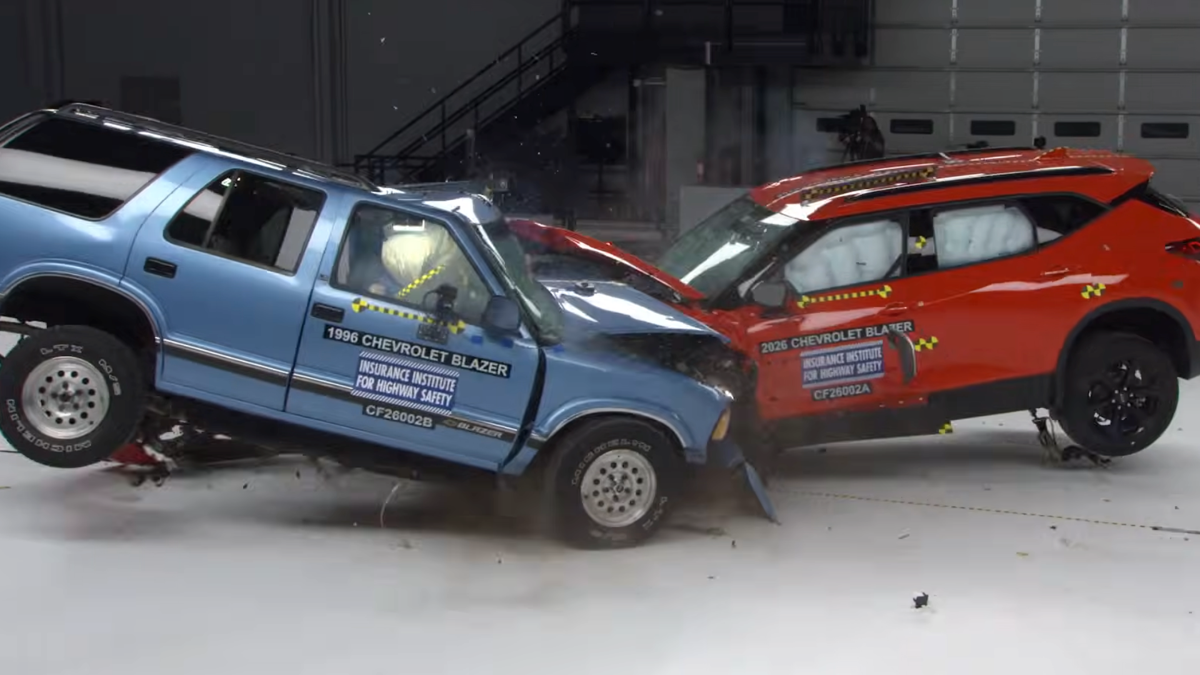
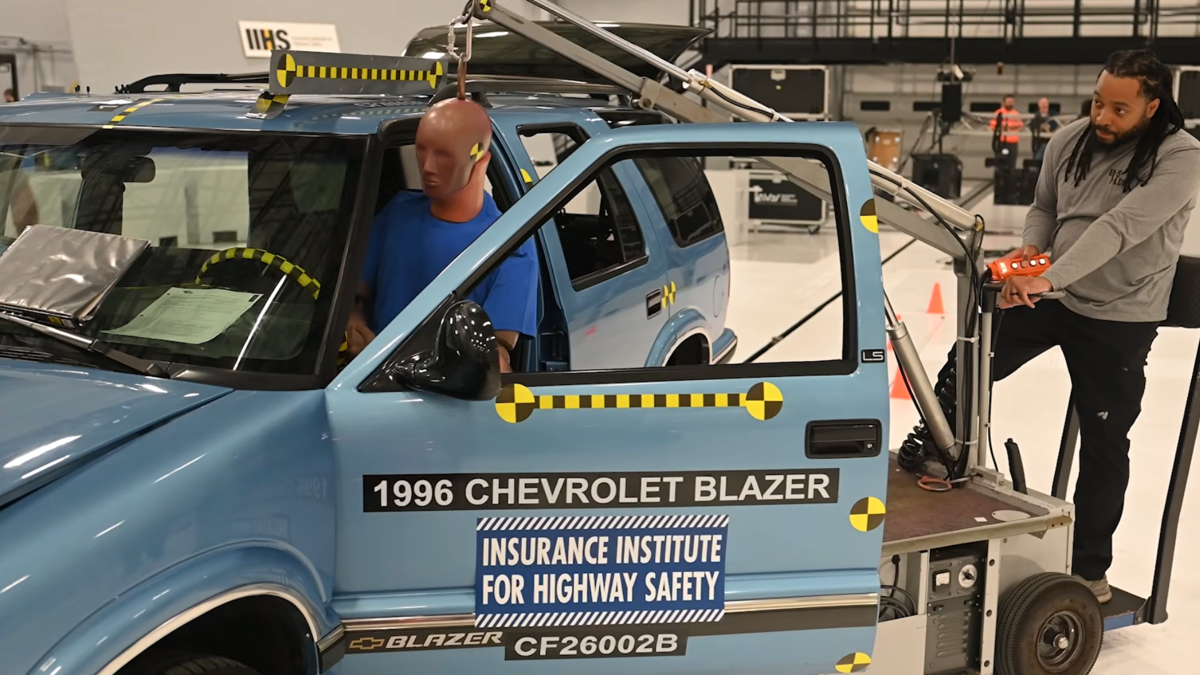
The newly released video provides a shocking visual comparison. It pits a classic 1996 Chevrolet Blazer against a brand-new 2026 model in a high-speed offset frontal collision. The violent results are both fascinating and terrifying for anyone who loves vintage SUVs. If you have ever wondered what occurs during a serious impact with an older model, this laboratory test provides a scary answer. The difference in structural integrity is immediately apparent upon impact.
The older 1996 Blazer experiences catastrophic cabin deformation immediately after striking the barrier. The metal steering column violently pushes deeply into the driver's survival space. Meanwhile, the modern 2026 Blazer smartly utilizes advanced frontal crumple zones to efficiently absorb destructive kinetic energy. The newer sport utility vehicle maintains a completely intact passenger compartment. This stark engineering contrast proves that modern high-strength steel and advanced computer modeling truly save lives.
YouTube/IIHS
Pushing for Better Protection
Dedicated automotive safety advocates are not stopping at our current safety benchmarks. Independent testing agencies continually revise strict grading criteria to accurately simulate more realistic road crash scenarios. They want all automakers to further improve side impact protection and essential pedestrian safety features. Earning a top safety score now requires constant corporate innovation. It is abundantly clear that achieving the highest industry safety accolades is becoming significantly more difficult for all vehicle manufacturers.
Federal government regulators are also working to update their standardized national assessment programs. However, successfully implementing these new crash testing protocols often involves navigating tedious bureaucratic hurdles. Recent industry reports strongly indicate that updated national crash safety standards are facing temporary bureaucratic setbacks in Washington. Despite these frustrating legislative delays, the entire automotive industry continues moving forward. The dramatic safety evolution from 1996 to 2026 Blazer undeniably proves that modern vehicle safety will only continue to improve over time.
YouTube/IIHS
Join the conversation
You can post now and register later. If you have an account, sign in now to post with your account.