_811205.png)
_e196d8.png)
_32b3d9.png)
_1c53fe.png)

The C8 Chevrolet Corvette ZR1 has claimed numerous lap records since its introduction nearly two years ago, proving that a mid-engine setup, loads of power, and plenty of downforce can leave much more expensive exotics running scared. However, if you choose to take full advantage of the 1,064-horsepower supercar's performance on a regular basis, it may end up hurting your paint. A small YouTube channel called Wheeler posted last year about this problem, saying that the downforce was causing paint to flex and crack, but what was an isolated issue has now occurred on at least two more ZR1s, reports autoevolution, showing that the pressure exerted by the struts of the ZTK package's carbon fiber wing doesn't play well with the relatively soft paintwork underneath.
Lightweight ZR1 Wing, Heavyweight Downforce
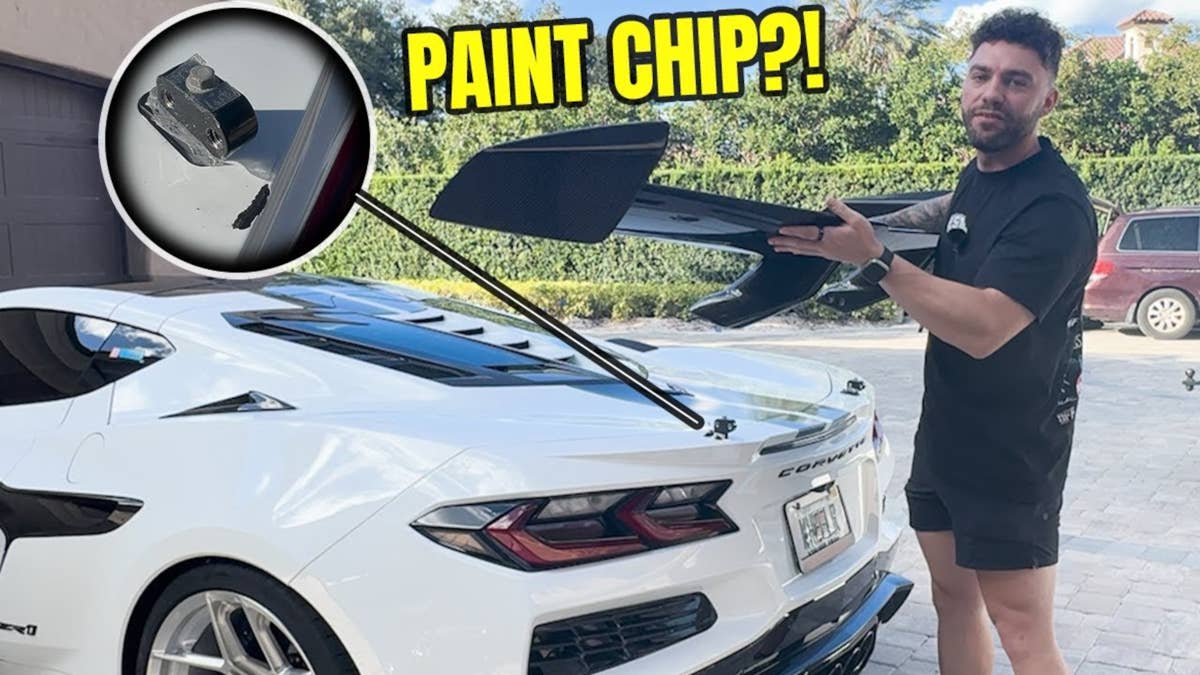
The C8 ZR1 without the ZTK package can reach as high as 233 mph, but with it equipped, going over 180 mph is reportedly enough to cause damage. For the record, the aerodynamic package drops the top speed to 224 mph, but you don't even have to go that fast to feel it working. Chevy claims 180 pounds of downforce at 80 mph and 978 lbs at 186 mph, and Wheeler says anything over 180 is enough to cause the areas around the mounts fastening the wing struts to the decklid to deform just enough to hurt the paint. Although the 75-inch carbon fiber wing is a featherweight at 17 lbs and can still handle the air pressure it generates, it appears that the reinforced section of the decklid is too small to adequately distribute this force in an even spread. More specifically, without foam gaskets or some other means of absorbing the load, the struts effectively push into the paint. With all that aerodynamic load placed on such a concentrated area, something that is possible in just a few seconds, the paint can't move as much or as quickly, and that means damage. It's not only the ZR1 that is at risk, either, as a Z06 with the same wing has also suffered.
Why Did Chevy Not Address This Earlier?
With the number of lap and high-speed records set by the ZR1 and ZR1X, you might assume that Chevy would be aware of the problem and would have done something to address it. Well, most buyers never take their cars to the edge of the ZR1's performance envelope, which explains why only three cases have come to light. But those who have experienced the problem have reportedly been treated well, with General Motors' service departments approving warranty claims requesting that the decklid be stripped and repainted at no cost to owners. Since so few customers have had the issue, it's not causing much damage to the Corvette brand, and although a recall to improve the structure would be the first choice for owners, it's just not financially prudent for GM to fix the majority of cars on which the problem will never show up. Aftermarket ZR1 wings offer protective gaskets, and GM could do the same, but that still costs money to develop and homologate, as would more resilient paint processes. For most, it's a non-issue. For those it does affect, GM will fix the damage, and for an even tinier group, perhaps the paint will never be fixed, worn rather as a badge of honor.
Join the conversation
You can post now and register later. If you have an account, sign in now to post with your account.