_811205.png)
_e196d8.png)
_32b3d9.png)
_1c53fe.png)

This Geely is Ready for Primetime
As we push the boundaries of automotive technology stateside, Chinese manufacturers seem two steps ahead. Instead of teasing flashy auto show prototypes, they put wild concepts straight into production. They are not just dreaming about the future; they are putting it in the driveway today.
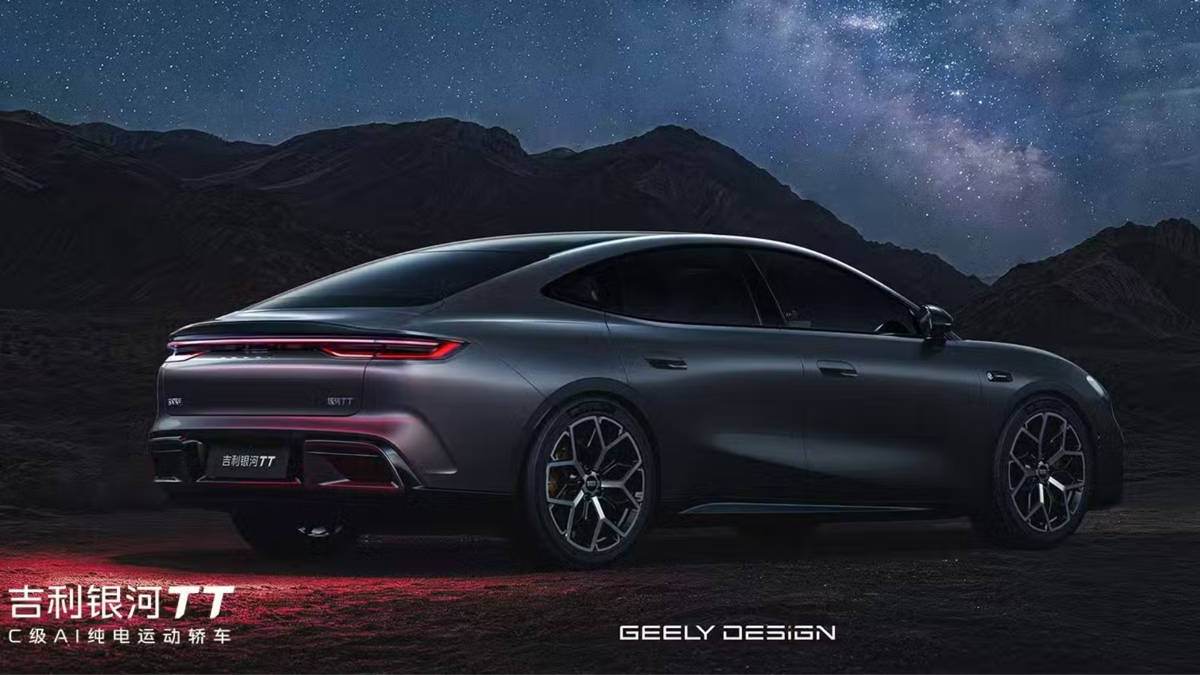
Enter the Geely Galaxy TT, a name evoking immediate amusement. Whether inspired by the Isle of Man TT as with the Audi TT, we'll never know, and the moniker sets a high bar. Launching in August, this AI pure-electric sports sedan targets young buyers with a sleek fastback profile, floating star-diamond headlights, and an active rear spoiler that generates 114 pounds of downforce. Stretching 196.8 inches on a 115-inch wheelbase, it comes in eight bold colors.
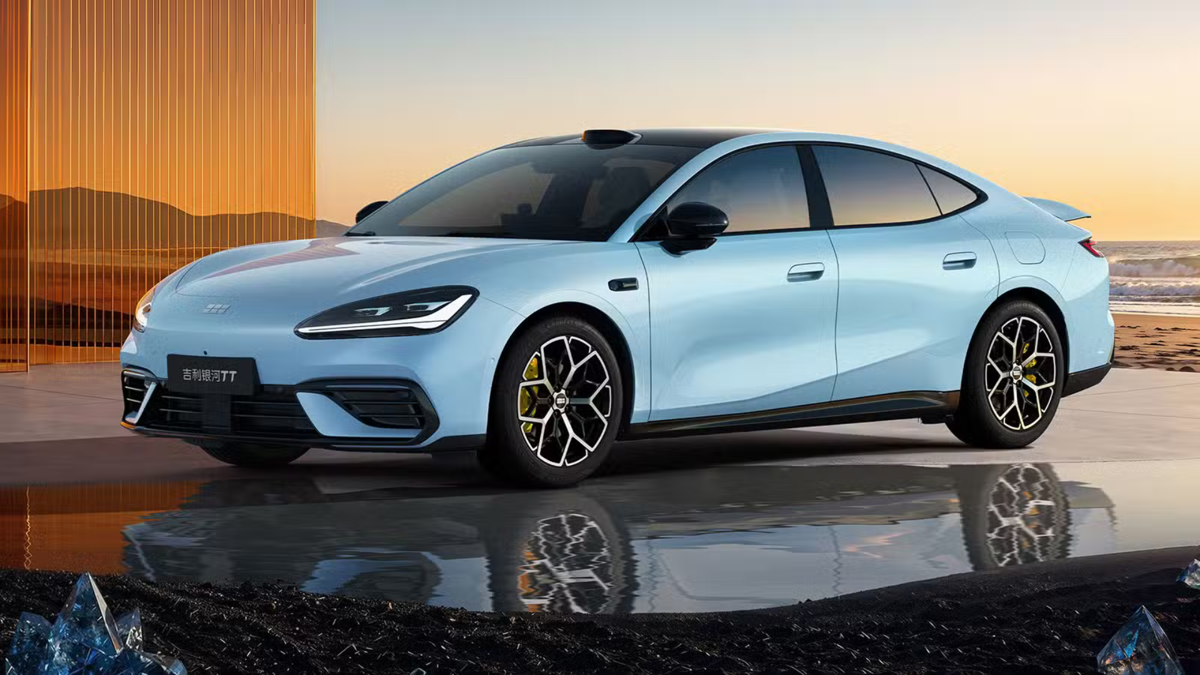
Geely
Color me Green
Step inside, and you find a cabin packed with amenities that most US cars simply do not offer. The Galaxy TT features a massive 3.9-cubic-foot frunk and a clever multi-level rear trunk offering 16.8 cubic feet of primary space alongside a 1.9-cubic-foot lower compartment, plus an integrated 5.5-quart built-in refrigerator and heater. Up front, the Flyme Auto second-generation cockpit supports interconnected operation across the digital cluster, the large center screen, and the augmented reality display. While tech giants have been exploring patents for virtual overlays and suppliers are debating how to integrate screens into auto glass, Geely is already offering a fully realized AR-HUD as standard equipment.
The smart driving assist suite is equally robust. The TT comes equipped with lidar and optional advanced driver assistance systems that easily rival anything currently on US roads. It is no wonder legacy European automakers are looking eastward to co-develop next-generation platforms. The TT also includes advanced sensor suites that could theoretically integrate under-vehicle hazard detection systems seamlessly into the vehicle's AI interface.
Underneath its skin, the TT rides on an 800V high-voltage architecture. Buyers can choose between a 333-horsepower rear-wheel drive model or a blistering 578-horsepower dual-motor version. Geely claims an optimistic pure electric range varying between 336 miles and 451 miles depending on the battery pack. Visually, the silhouette looks heavily derived from the Xiaomi SU7 performance EV, bringing a familiar but striking aesthetic to the road. Official pricing has not been mentioned yet.
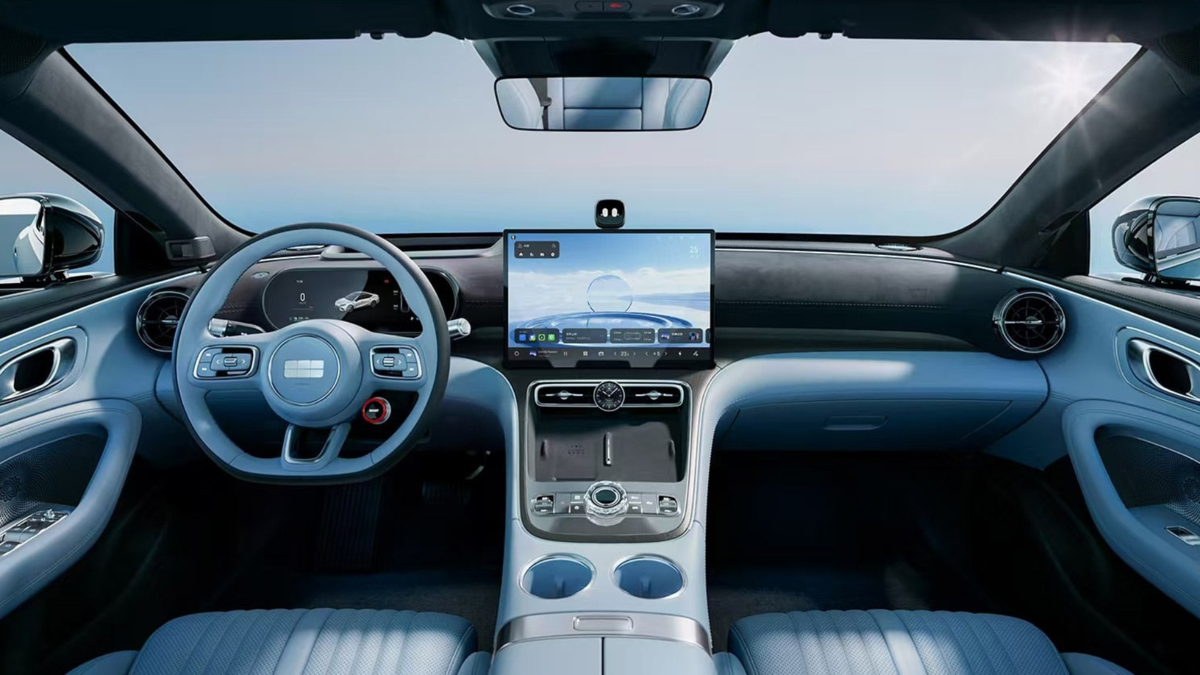
Geely
The Lowdown
The overarching takeaway here is that car companies in China are simply not afraid to draw outside the lines. They are willing to take risks on cutting-edge technology that Western companies are still debating in boardrooms. While some executives argue that relying entirely on touchscreens misses the mark for driver engagement, the sheer volume of innovation coming from vehicles like the Galaxy TT is impossible to ignore.
American carmakers need to take a page out of this playbook. The cautious, iterative updates we see year after year will not cut it when overseas competitors are packing family sedans with active aerodynamics, AR displays, and hot and cold food storage. If we want to stay relevant in the global EV race, we need to start putting our wildest concepts into actual production.
Geely
Join the conversation
You can post now and register later. If you have an account, sign in now to post with your account.