_811205.png)
_e196d8.png)
_32b3d9.png)
_1c53fe.png)

The desert Southwest is under a stretch of dangerous heat, with the NWS in Flagstaff reporting an Extreme Heat Warning for the Grand Canyon and surrounding low-elevation areas, and readings past 110 degrees anywhere below 4,000 feet. Phoenix, Tucson, Las Vegas, and the desert stretches of I-10, I-15, and I-8 are all in the danger zone.
ChatGPT
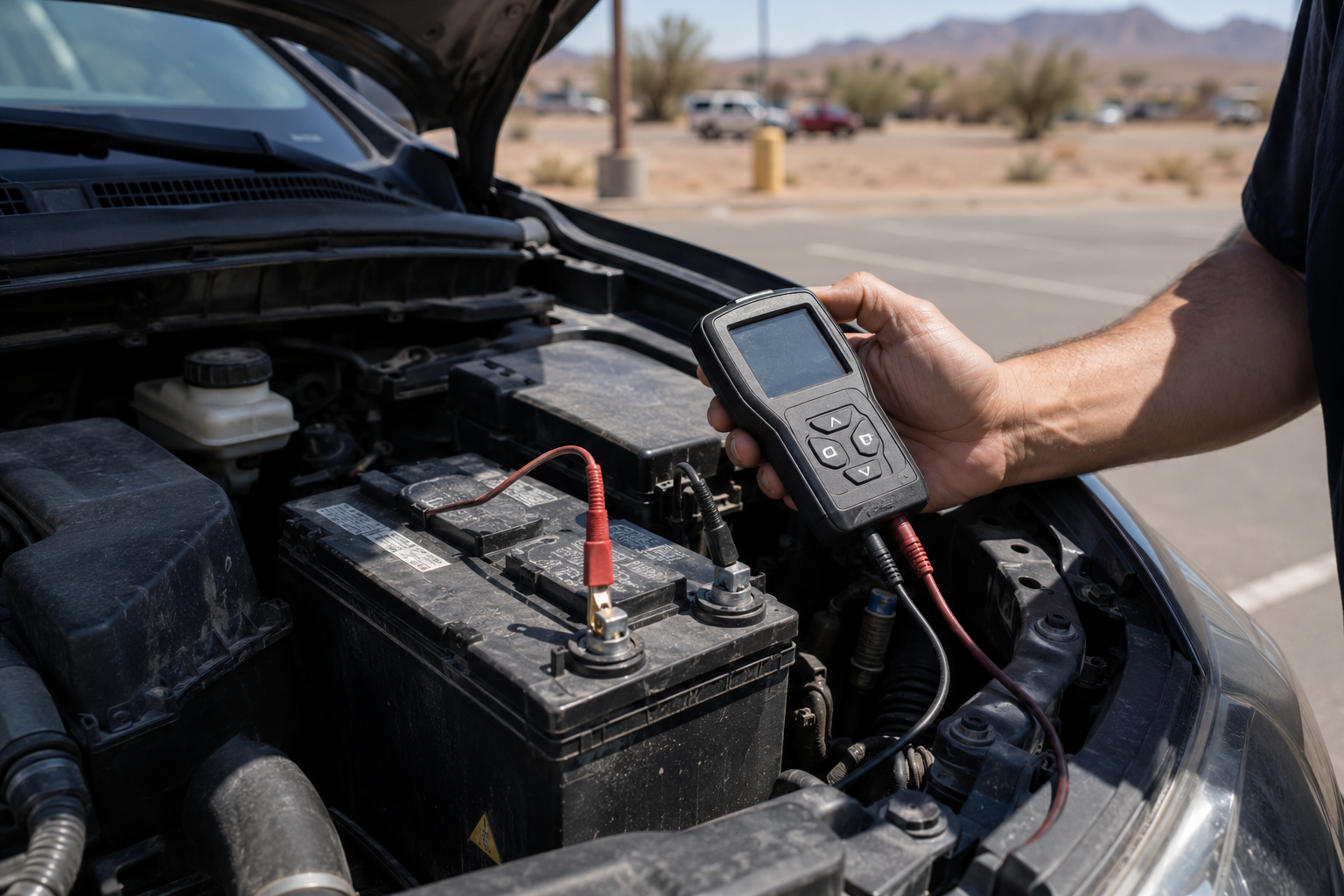
Ask most people what kills a car battery, and they'll say winter cold. In reality, heat is the bigger killer: high temperatures accelerate the chemical breakdown inside a battery and evaporate its fluid, and a battery cooked all summer often dies on the first cool morning that follows. The failure feels like a cold-weather problem, but the damage was done in July.
What to Expect
- Overnight lows that never recover. When it stays in the 90s overnight, your battery and engine bay never fully cool, so heat damage compounds.
- Underhood temperatures far above the air temperature. Sitting in traffic or idling in a parking lot pushes engine-bay heat well past the outside reading.
- No warning before failure. Heat-damaged batteries often crank fine right up until the moment they don't.
Road Conditions
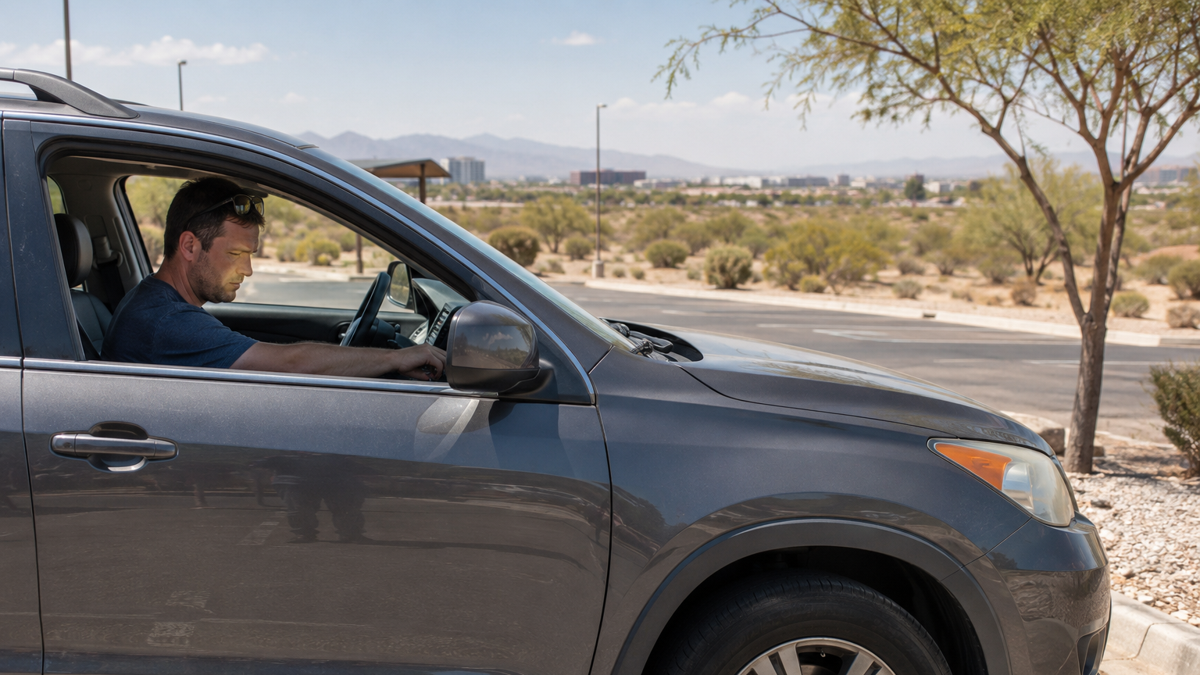
The risk zone follows the heat: I-10 across the Arizona low desert, I-15 through the Mojave toward Las Vegas, and I-8 through the far southern basins. These corridors combine long service gaps with brutal shadeless shoulders, so a no-start or a heat-related stall leaves you exposed. Monsoon storms now entering Arizona add flash-flood hazards to the same routes, so the danger runs both hot and wet this week.
ChatGPT
Beyond the Battery
If you want the short list of what heat attacks, in order:
- Battery — the top heat casualty, especially if it's more than three years old.
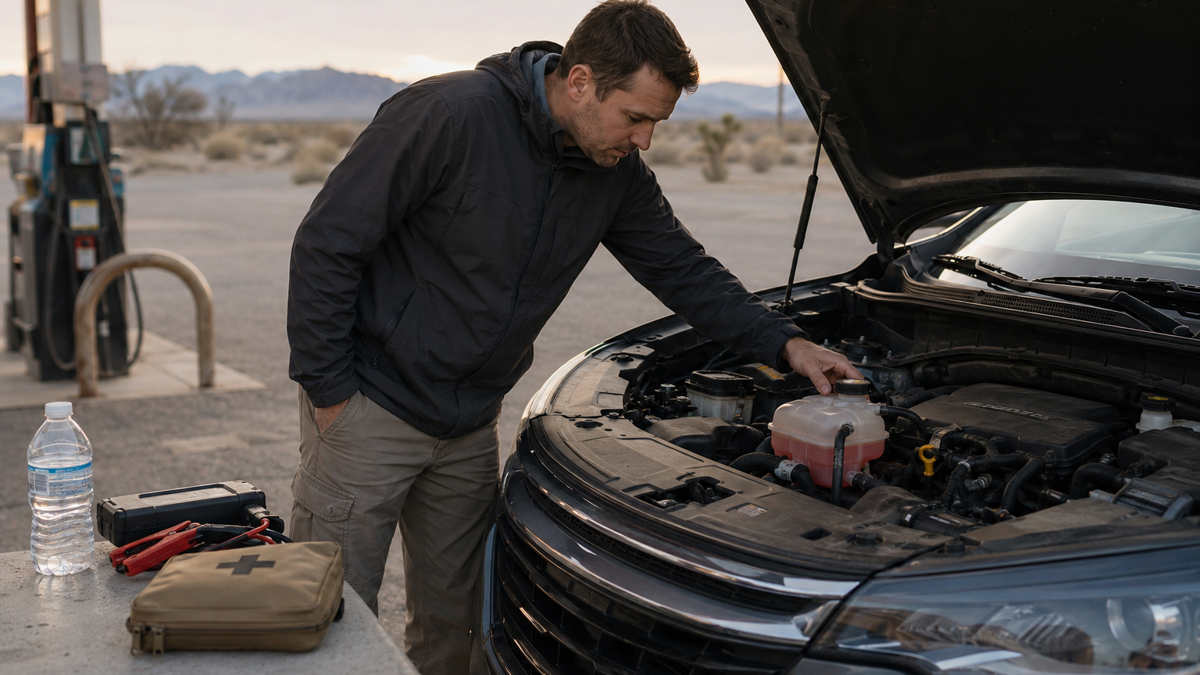
- Coolant and cooling system — low coolant or a tired water pump turns a hot day into an overheat.
- Tires — underinflated tires build heat and blow out (worth its own check).
- Cabin electronics and phones — a phone left on the dash can overheat and shut down exactly when you need navigation.
ChatGPT
Hot-Weather Driving Tips
- Have the battery tested now if it's over three years old. Most parts stores do it for free in minutes.
- Check coolant level when the engine is cold and top off if low.
- Park in shade or nose-out so the engine bay isn't baking in full sun.
- Never leave people or pets in a parked car, even briefly. Interior temperatures turn lethal within minutes.
Timing
The heat holds through midweek across the desert Southwest, with the highest risk during the afternoon and the poorest overnight recovery in the urban heat islands of Phoenix and Las Vegas. If you're heading out, go early.
Join the conversation
You can post now and register later. If you have an account, sign in now to post with your account.