_811205.png)
_e196d8.png)
_32b3d9.png)
_1c53fe.png)

From Forgotten Dream
Before McLaren became a supercar heavyweight, Bruce McLaren was already dreaming beyond just Formula 1 and Can-Am. He wanted to put his race-bred engineering on the street, and the M6GT was supposed to kick things off. But after Bruce’s tragic death in 1970, the project stalled out, leaving the M6GT as one of the greatest 'what ifs' in McLaren lore.
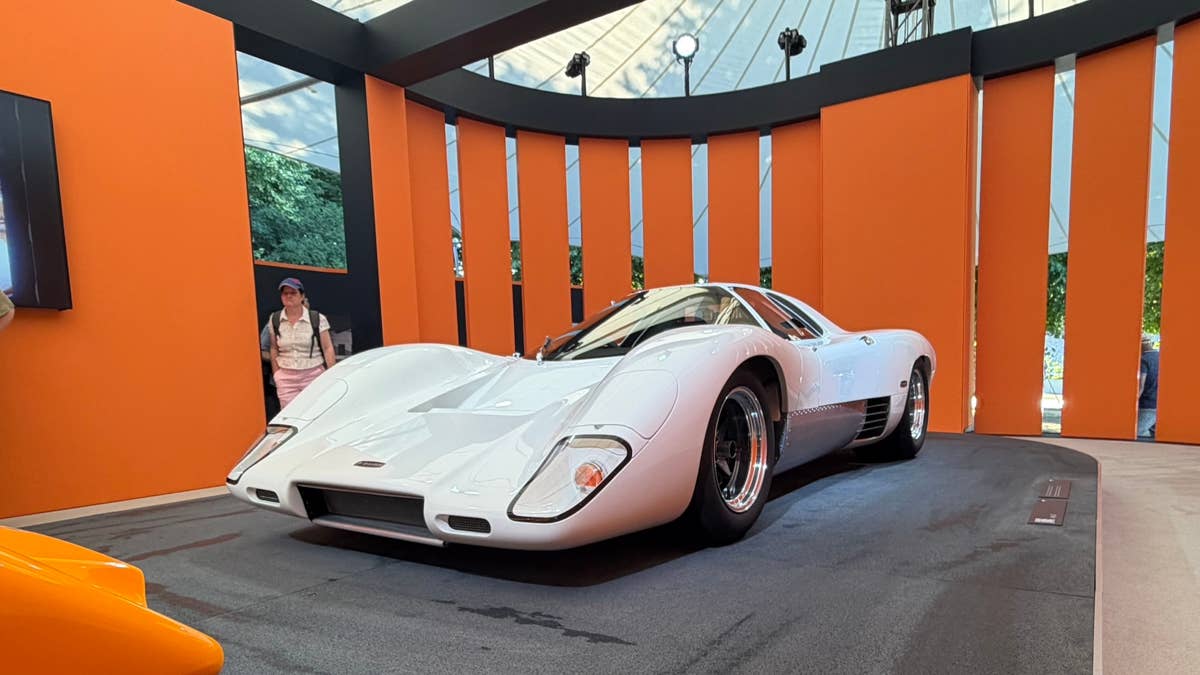
When McLaren Special Operations (MSO) dropped the news that they’d rebuilt the M6GT using original molds and old-school parts, the first photos made it look like something straight out of a museum. Creamy white paint, a tiny greenhouse, and a stance so low it barely seems real – it was almost too perfect.
But up close at the 2026 Goodwood Festival of Speed? That’s a whole different story.
Adam Lynton/Autoblog
A Restoration That Rewards Every Closer Look
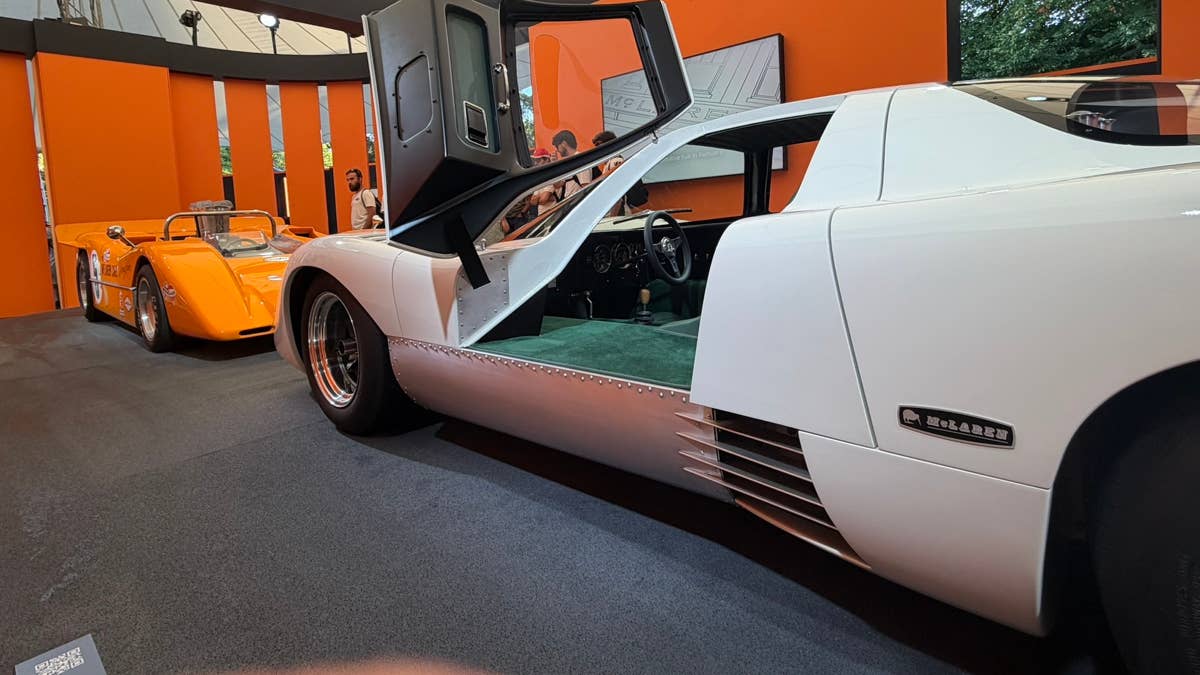
Photos don’t do the M6GT’s size justice. It’s lower, wider, and way more delicate than you’d expect in metal. The proportions scream ‘future classic’ even now. Park it next to one of Bruce’s Can-Am monsters and you instantly see the family resemblance.
And those butterfly doors are a chef’s kiss, swinging up to show off an interior that’s interestingly inviting for something this small. Forget polished metal or fancy leather – the deep green carpet covers almost everything, turning this masterpiece into something that feels more like a retro lounge.
Meanwhile, the skinny three-spoke wheel, old-school gauges, exposed rivets, and that hand-turned walnut shifter all scream function over flash. Nothing’s over the top. Every switch and dial is there for a reason, and they all add character to the car.
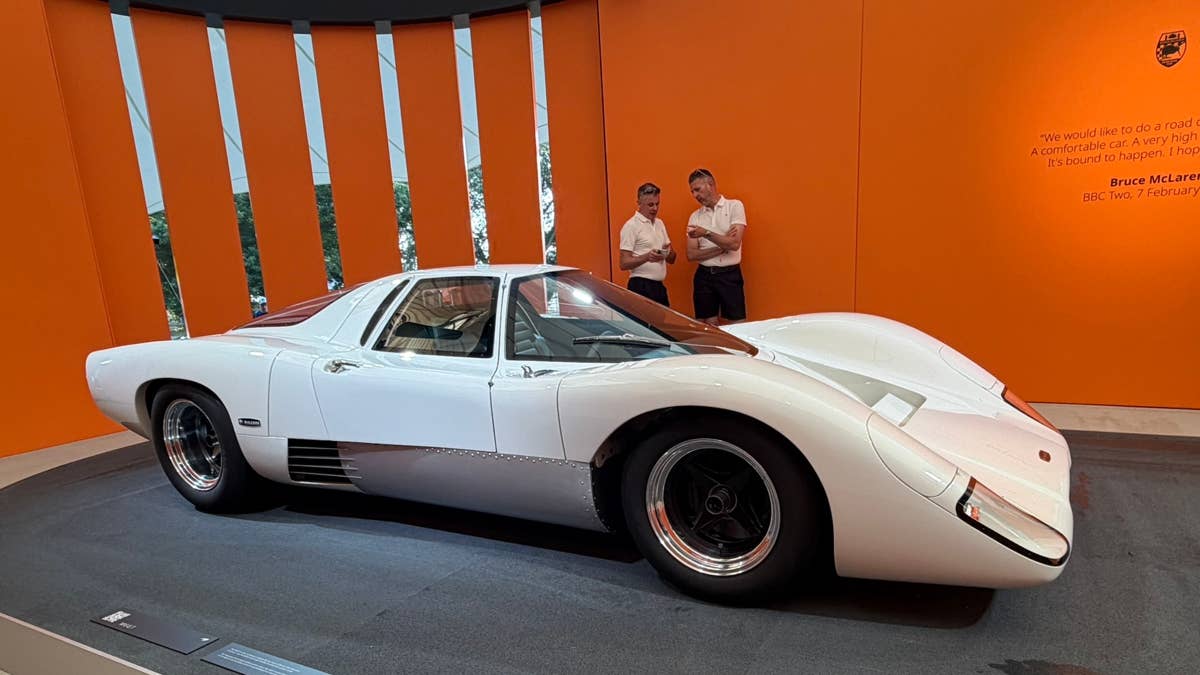
As for the bodywork, subtle rivets, clean side vents, and those flowing curves make the M6GT look almost alive from some angles. The Colnbrook White paint – a tribute to the factory where Bruce developed his early road-car ambitions – looks even better in person, adding a softer vibe that pops against the dark wheels and green cabin.
Adam Lynton/Autoblog
Built The Way Bruce Intended
MSO didn’t try to modernize the M6GT – they went full preservation mode. It sits on a period-correct M6A chassis, checked against old McLaren reference cars, and uses as much original suspension hardware as possible. The hidden stuff – like the roll hoop and frame supports – was hand-built by MSO’s own crew, and they even used old-school aluminum rivets installed with aerospace tricks.
Under the skin, there’s a period-correct Chevy small-block V8 with those classic 'camel hump' heads, hooked up to a manual gearbox – just like Bruce wanted.
This restored M6GT also kicks off MSO’s new heritage collection, finally giving McLaren’s first road car the spotlight it’s always deserved. Over 50 years after the project hit pause, the M6GT is finally finished – not as a modern restomod, but as the road car Bruce never got to build.
Adam Lynton/Autoblog
Join the conversation
You can post now and register later. If you have an account, sign in now to post with your account.