_811205.png)
_e196d8.png)
_32b3d9.png)
_1c53fe.png)

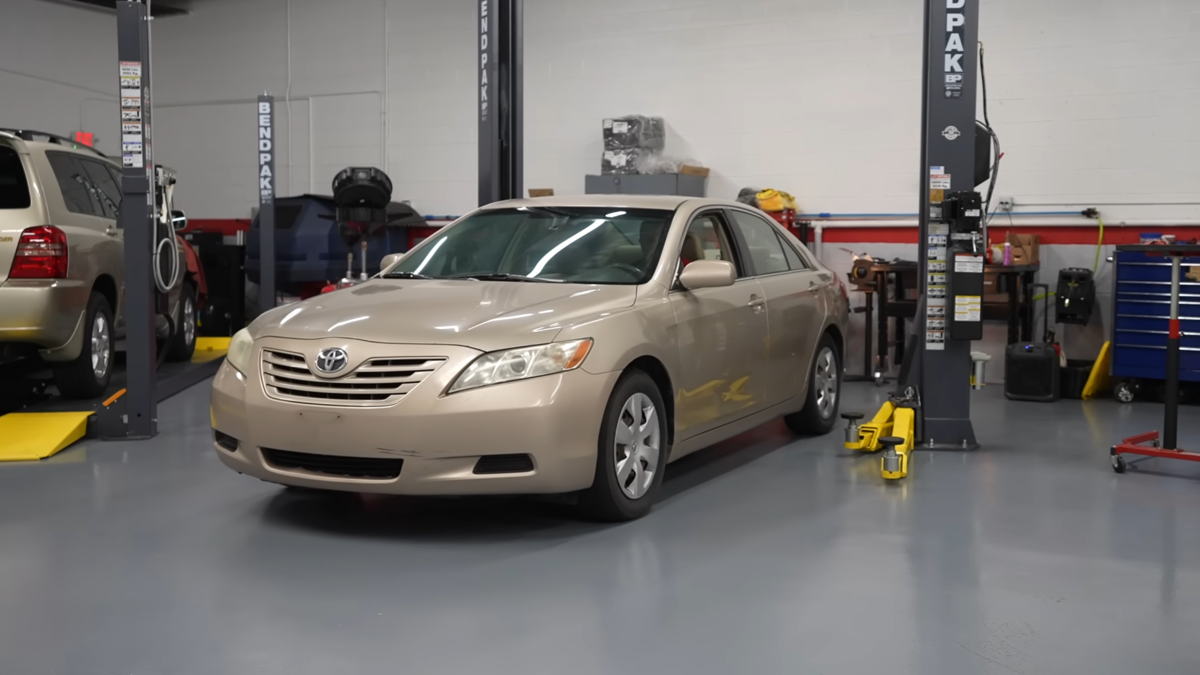
Toyota's reputation for reliability is so embedded in car culture that it’s almost a cliché at this point. But there is a difference between a car that makes it to 100,000 miles without drama and one that absorbs a factory defect for three times that mileage, and still refuses to quit. Trusted YouTube mechanic The Car Care Nut pulled the engine from a 2009 Toyota Camry with 305,000 miles on the clock, and what he found inside should have killed the car long before it reached that number.
Toyota's 2AZ-FE four-cylinder motor, fitted to Camrys from 2002 onward, shipped from the factory in 2007 with low-tension piston rings, an invisible defect that Toyota even tried to address with a limited recall that this owner missed. As a result, over time, the rings gummed up, glazed the cylinder walls, and burned through oil at a rate that eventually hit one quart every 150 miles. For most engines, that would have meant a seized block. This one just kept going.
The Car Care Nut/YouTube
What 300,000 Miles Actually Looks Like Inside
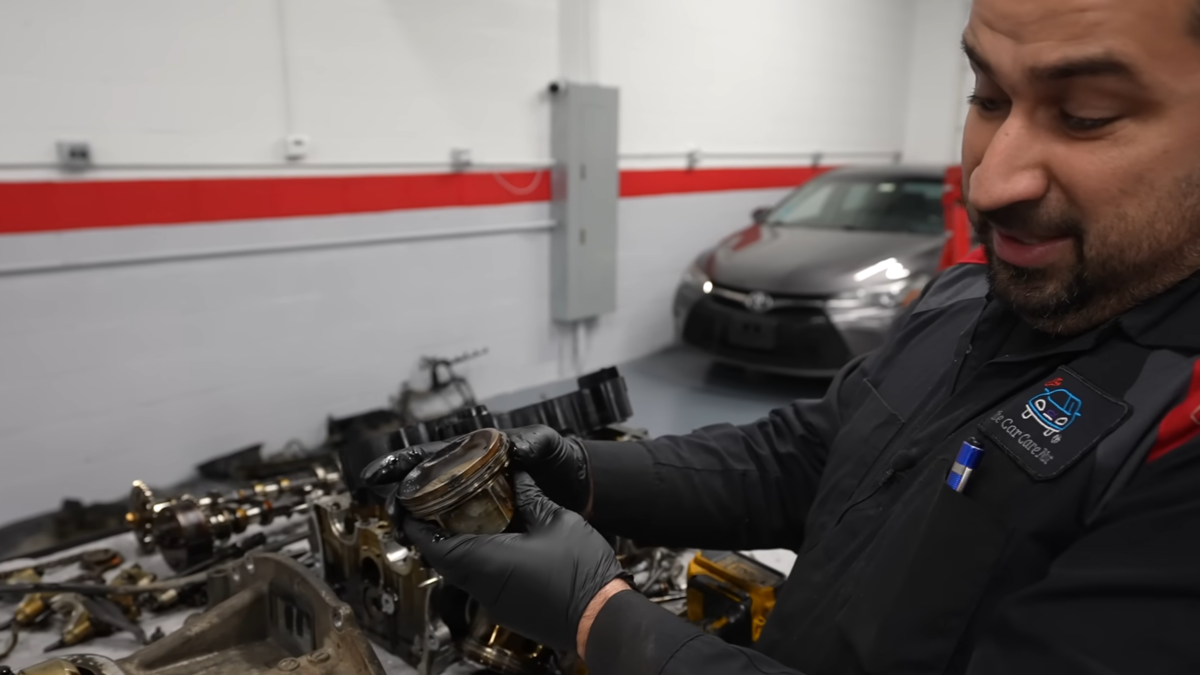
The average car is driven around 12,000 to 15,000 miles a year and stays on the road for roughly 11 to 12 years before most owners move on. That puts a typical retirement somewhere around 150,000 miles. This Camry covered twice that distance with a factory defect running the whole time. That said, the teardown is grimly impressive. Cylinder walls that once had a crosshatch pattern were polished completely smooth, worn flat by years of oil-starved friction.
The Car Care Nut/YouTube
The piston rings were locked solid. And yet the crankshaft journals showed barely a scratch. Rod bearings had mild surface wear that the mechanic couldn't even feel with a fingernail. The camshafts were fine, as was the cylinder head. Strip away the one catastrophic flaw, and what remained was an engine that had plenty of life left in it, especially when compared to modern engines.
Why The Owner Spent $5,000 to Keep It Running
The original owner drove from Illinois to Florida in 2009 specifically to buy one of the last manual-transmission Camrys sold in the US. He kept records of everything, putting his total cost of ownership over 305,000 miles at $67,000, with gasoline costs to run it accounting for nearly half of that. The engine rebuild, a new Toyota short block with updated pistons plus labor, ran just over $5,000. That math, combined with a car that averages close to 30 MPG and still drives cleanly, made the decision straightforward to keep it driving for the next 300,000 miles and more.
Join the conversation
You can post now and register later. If you have an account, sign in now to post with your account.