_811205.png)
_e196d8.png)
_32b3d9.png)
_1c53fe.png)

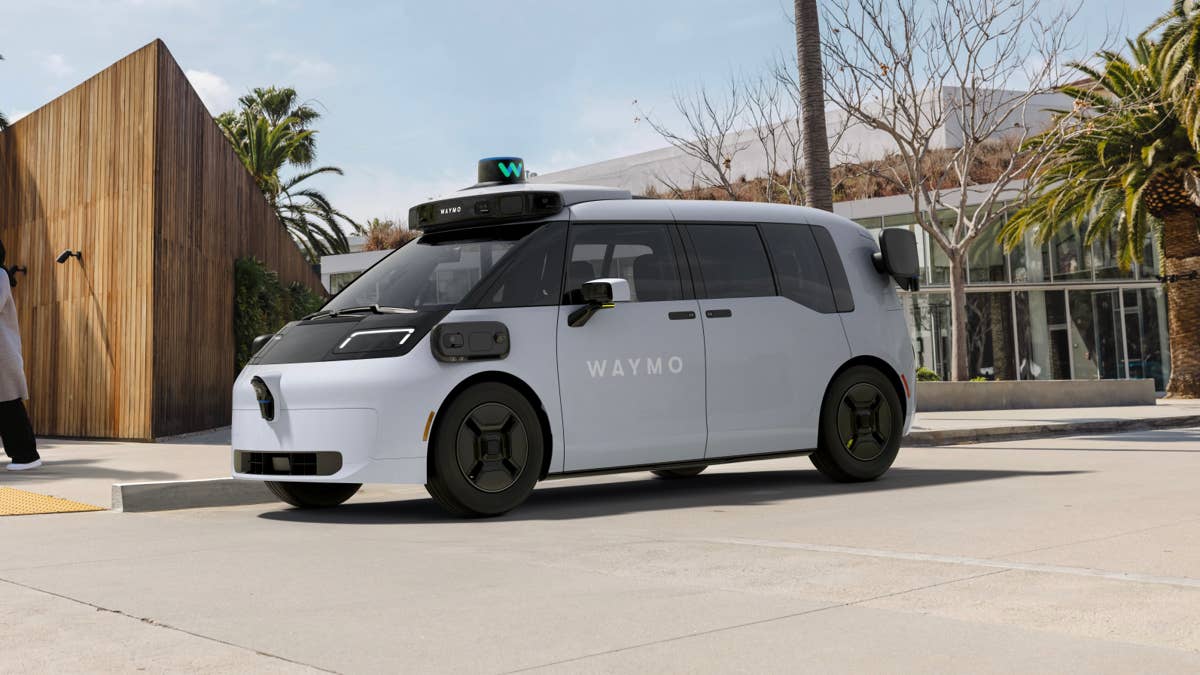
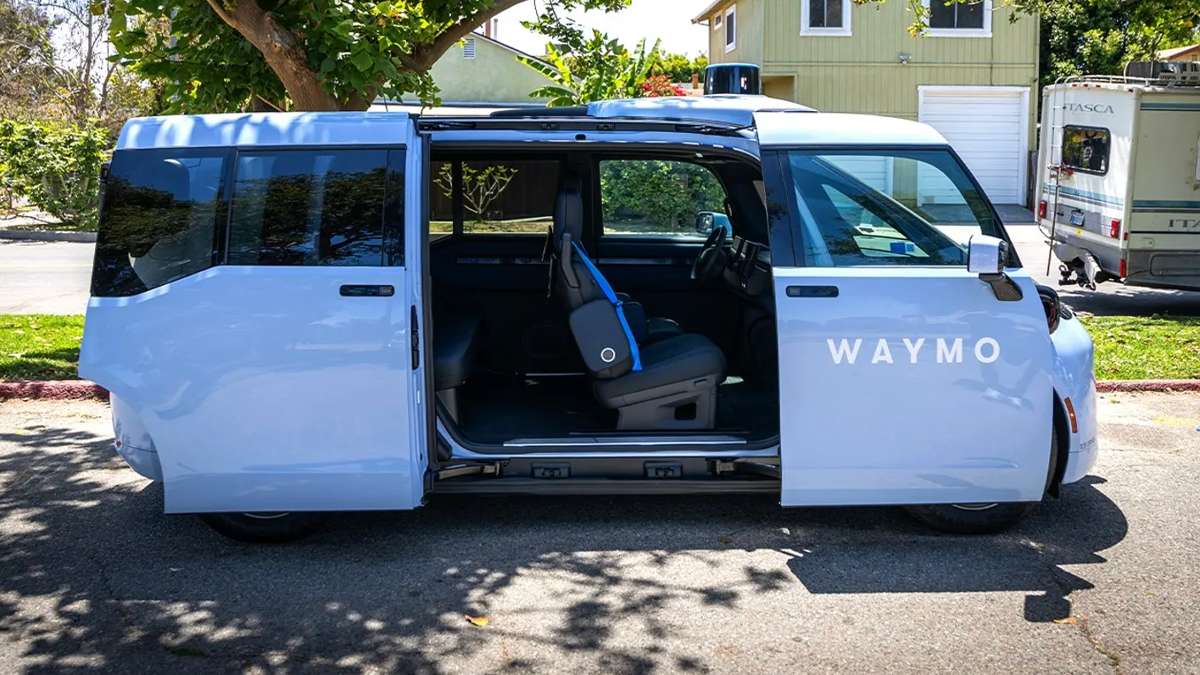
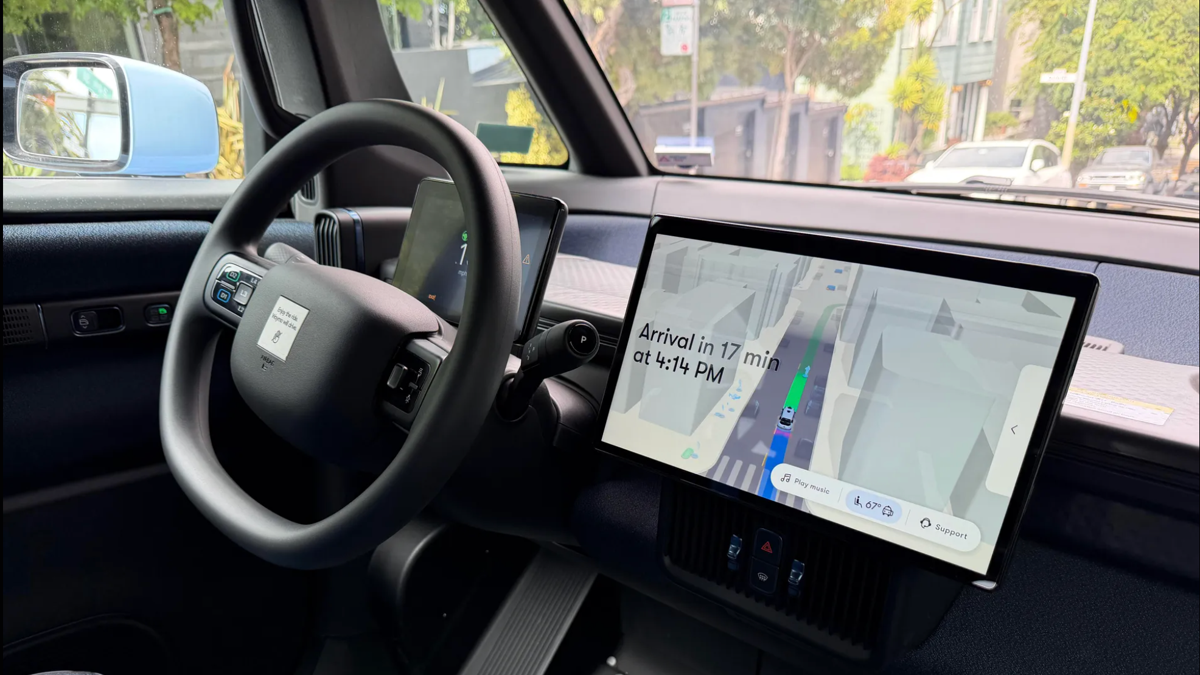
Waymo has decided to make driverless taxis a less daunting prospect with its Ojai (pronounced Oh-hai) robotaxi. On the outside, it’s just a boxy, blue minivan with a few sensors and automatic sliding doors, which open the portal to a far roomier cabin than its previous offerings or even Tesla’s Robotaxi can offer. In order not to alienate skeptical newbies on their maiden autonomously driven voyage, there’s still a steering wheel. Inside, the Ojai abandons the cramped, converted-car feel of earlier Waymo vehicles.
The cabin has been designed around passengers first, with a roomier layout, generous legroom, and the sort of practical touches ride-hailing users actually care about, including charging points and conveniently placed cupholders. Accessibility has also been pushed up the priority list, with a low floor, easy ingress, and strategically positioned grab handles helping passengers get in and out with less effort, although wheelchair users are still not catered to.
Waymo
Straying From The Waymo Formula
Unveiled as the latest addition to Waymo's growing autonomous fleet, the Ojai marks a significant departure from the company's earlier strategy. Previous Waymo vehicles, whether based on the Chrysler Pacifica or the Jaguar I-Pace, were fundamentally existing cars adapted for autonomous duty. They worked, but they always felt like conventional vehicles carrying a technological backpack. The Ojai is purpose-built for the job, designed around autonomy rather than retrofitted to accommodate it.
Allen J. Schaben/Los Angeles Times via Getty Images
The Ojai's journey to production has been anything but swift. First revealed by Waymo in 2021, the autonomous shuttle has spent the better part of two years undergoing public-road testing since 2024. Its arrival also comes at a somewhat awkward moment for the company. While Waymo is aggressively pushing to expand its driverless services across the US and beyond, it recently suspended operations in six cities after identifying issues with how its vehicles handled flooding scenarios. The company has also paused its autonomous highway-driving programme amid concerns surrounding navigation through construction zones.
Made In China, With a Caveat
Ojai debuts Waymo’s new hardware and software systems, which, to no one’s surprise, lean heavily on AI. What is surprising, however, is that it’s effectively a Chinese EV that’s allowed to ply on American roads. Ojai manages to bypass any restrictions on Chinese vehicles because while Zeekr makes the car, the telematics and connected software systems are all developed in the US.
Free for a limited time only
The Ojai's public rollout is set to begin within weeks, with early access initially limited to a small group of riders in San Francisco, Los Angeles, and Phoenix, according to Fox News. Waymo will use this first phase as a real-world proving ground, offering complimentary rides while it collects user feedback and fine-tunes the service before a broader launch. The company has already identified Denver, Las Vegas, and San Diego as the next destinations on its expansion roadmap. Those keen to get an early look can register through the Waymo app and apply to join the Trusted Tester programme.
Join the conversation
You can post now and register later. If you have an account, sign in now to post with your account.