_811205.png)
_e196d8.png)
_32b3d9.png)
_1c53fe.png)

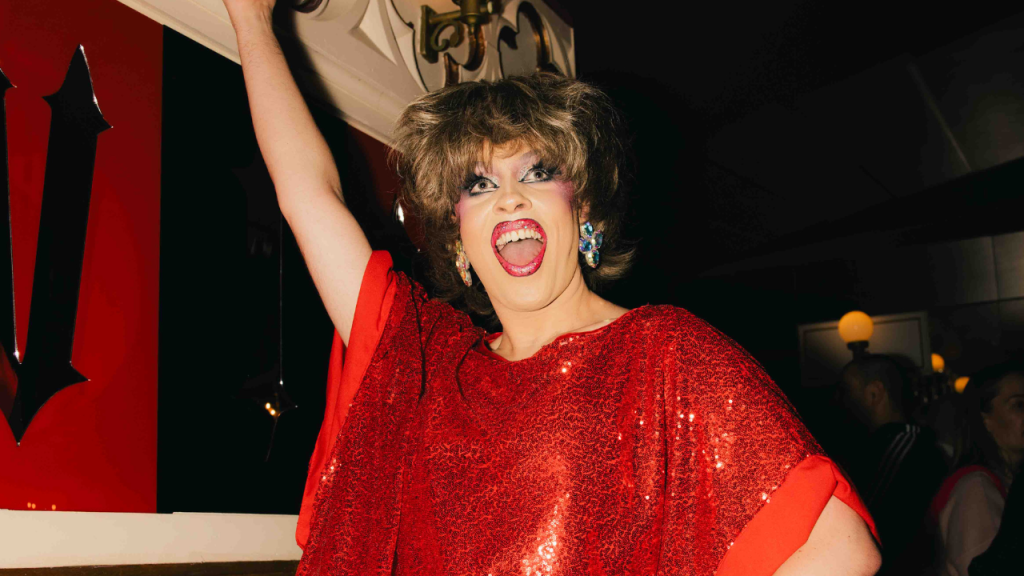
Sydney’s Divine Playhouse has officially had its lease terminated following weeks of pressure from conservative religious groups, with organisers now preparing a peaceful “sing-in” rally and searching for a new home.
The queer arts, live music and nightlife venue confirmed on Monday that landlord Revelop had torn up its lease on the basis of “offensive trade” – a legal term derived from a ye olde NSW law dating back to 1842 (as in before the advent of household electricity, telephones, cars or penicillin), which was originally introduced to regulate foul smells and industrial waste.
“We believe this termination was unlawful and unjust. I am devastated. I am angry – for us, for our artists, for this city and its people” – Kat Dopper
Yes, a law from the era of horse-drawn carriages and open sewers is now being resurrected in a dispute involving drag performers, cabaret and a cheekily named brunch.
According to reporting by The Music, the phrase “offensive trade” has never, in its 184-year history, been tested by a court to determine whether it extends to moral or religious offence.
Divine Playhouse founder Kat Dopper says the decision came without meaningful discussion or good-faith engagement, leaving the team just days to strip months of work from the heritage-listed former church on Kent Street.
“It’s over. Our lease terminated, our artists cancelled, our venue being cleared out,” Dopper said.
“We believe this termination was unlawful and unjust. I am devastated. I am angry – for us, for our artists, for this city and its people.”
The 150-year-old church building was deconsecrated in the 1930’s and had spent decades operating as a theatre and community space before Divine Playhouse moved in on a one-year lease.
Apparently, however, its religious significance experienced a miraculous resurrection the moment queer artists began using satire inside it.
The venue’s brief existence became the subject of organised opposition earlier this month, when around 70 people from several conservative Christian groups gathered outside its opening night to protest programming they deemed insulting to their faith.
The venue had already changed its original name, Unholy Playhouse, to Divine Playhouse after concerns were raised, but received a breach notice from its landlord the day after the protest.
It was subsequently forced to close while exploring legal options. Now, the lease has been formally terminated.
“Our sense of injustice is overwhelming,” Dopper said. “Divine Playhouse was created as a critical new cultural home for diverse artists and communities from all over Sydney and New South Wales. It’s sitting empty – no artists, no audiences, the joy and community we built in that room, silenced.”
The language used to end the lease is also troubling well beyond this single venue.
If “offence” can be interpreted broadly enough to become grounds for eviction, then any artist, comedian, theatre-maker or venue programming work that challenges social or religious ideas could become vulnerable to the same tactic.
As Dopper put it: “If a landlord’s personal beliefs can shut down an arts venue, no stage in this country is safe.”
“Who decides what art is acceptable? Right now, the answer is whoever owns the building.”
And that, friends, is the particularly grim irony here.
Sydney has spent years insisting it wants its nightlife, creativity and international cultural reputation back after the lockout era helped hollow out entire entertainment precincts.
But the city’s apparent invitation to artists increasingly seems to come with several footnotes: be daring, but not offensive; be diverse, but not disruptive; create something bold, provided no organised lobby group complains to the landlord.
Public support for Divine Playhouse has surged since the closure was announced, though.
More than 17,000 people signed a petition supporting the venue in just four days, while a GoFundMe campaign has raised more than $36,000 to assist with legal expenses and financial losses.
The venue says a fundraiser show is also being planned to get cancelled artists back on stage and paid.
That support will now move from the internet into the streets, with Divine Playhouse announcing a peaceful “sing-in” rally at Sydney’s Hyde Park from 12pm on Saturday, 25 July.
“This Saturday’s rally isn’t just about one venue,” Dopper said. “It’s about the future of arts and culture in New South Wales and who gets to decide it.”
“They can sing? Well, we can sing louder.”
The venue is also calling on developers, landowners and anyone with an unusual vacant space to come forward as it searches for a new home.
“To anyone with a unique space: you wouldn’t just be offering us a home,” Dopper said.
“You’d be providing the lifeblood for the future of this city’s independent arts and cultural communities.”
And it’s a mission that matters, too. Divine Playhouse had planned to employ, commission and support hundreds of artists, performers, technicians, promoters and independent creative workers throughout its residenc, investing an estimated $650,000 into Sydney’s independent arts sector. Its closure is therefore not merely a symbolic loss in some abstract battle over free speech.
It means cancelled work. Lost wages. Abandoned performances. Artists once again being told the spaces available to them can disappear almost overnight.
Sydney should be large and confident enough to accommodate religious belief, queer art, satire, discomfort and disagreement without one of those things needing to erase another.
Instead, an arts venue is empty, its program dismantled, while a Victorian-era law about offensive smells hangs over the whole debacle. And that’s what really stinks.
Further Reading
Sydney Keeps Saying It Wants A Nightlife. Then It Shuts Down The People Creating One
A 150-Year-Old Sydney Church Is Being Reborn As A Wild New Live Music Venue
The post An 184-Year-Old Law Has Just Been Used To Push Queer Culture Out Of A Sydney Venue appeared first on Music Feeds.
Recommended Comments