_811205.png)
_e196d8.png)
_32b3d9.png)
_1c53fe.png)

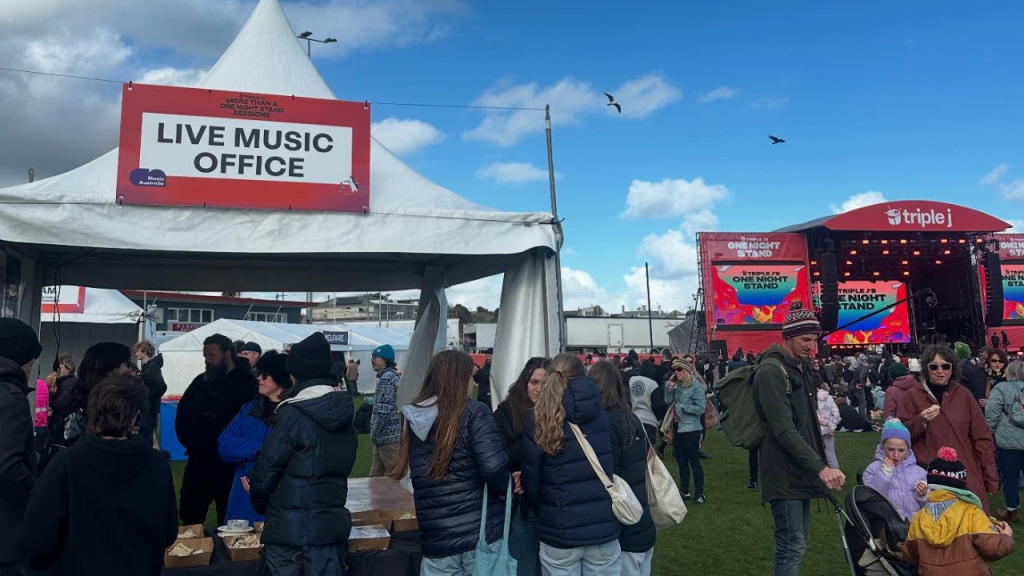
For more than a decade, one of Australian live music’s biggest fights happened behind the scenes.
Not in mosh pits or on festival stages, but in council meetings, licensing battles and endless policy documents trying to stop venues disappearing under regulation (remember the infamous Sydney mirror ball crackdown of 2019?). Now, after 13 years, the organisation that helped lead that charge is calling time.
“In the 13 years since the Live Music Office was established, the landscape has changed dramatically”
APRA AMCOS has announced that both the Live Music Office (LMO) and its community-focused Live And Local program will officially wrap up from 1 July, closing the chapter on a project that quietly helped reshape the conditions for live music across Australia.
And while at first glance it might sound alarming – another support structure disappearing during an already brutal period for the industry – but APRA’s message is actually something else entirely: the fight has changed.
When the Live Music Office launched in 2013 alongside the National Cultural Policy and Creative Australia, live music faced a very different set of problems. Liquor licensing restrictions, planning laws, noise complaints and venue regulations were making it increasingly difficult for venues to operate and for local scenes to survive.
The mission was simple: remove barriers and build an environment where live music could actually exist.
Over the next 13 years, the LMO worked with governments and councils around the country to reform policy, develop best-practice resources and advocate for venue protections. Alongside that work, Live And Local partnered with more than 40 councils and supported over 1,000 local music events nationwide – helping councils understand not just the cultural value of live music, but its economic impact too.
In that time, Australia’s music infrastructure has changed dramatically.
State music offices were established. Music Australia launched. Night-time economy commissioners emerged. Dedicated live music funding streams appeared. Organisations like the Australian Live Music Business Council, Live Music Venues Alliance and Australian Festival Association stepped into the space.
“In the 13 years since the Live Music Office was established, the landscape has changed dramatically,” APRA AMCOS CEO Dean Ormston said in a press statement.
“With government bodies at a federal and state level now doing such an incredible job for live music, and local councils empowered to continue the good work, now feels like the right time to hand back the mantle.”
But APRA’s announcement also acknowledges something uncomfortable: the regulations that once threatened live music may no longer be the biggest problem.
Money is.
According to a 2024 APRA AMCOS and OneMusic survey of almost 3,000 venues, more than 70 per cent reported they had stopped programming live music for financial reasons. More than 70 per cent also said tax rebates or incentives would be the single most effective intervention to bring live music back.
So rather than continuing to focus on regulatory reform, APRA says its advocacy efforts will now shift toward pushing the Federal Government for a broad-based live music tax incentive scheme – a recommendation already backed by the 2025 House of Representatives Standing Committee on Communications and the Arts.
Economic modelling commissioned by APRA estimates such a policy could generate between $636 million and $920 million in economic activity, create up to 10,800 jobs and support more than 322,000 additional live performances annually.
In other words: Australian live music may have won one battle. But the next one looks a lot more expensive.
Further Reading
Aussie Festival Prices Are Rising Twice As Fast As Inflation, New Study Finds
Melbourne’s Beloved Stay Gold Is Closing This June
Here’s Why Splendour In The Grass 2024 Was Cancelled
The post The Biggest Threat To Australian Live Music Isn’t Red Tape Anymore – As APRA Closes The Live Music Office After 13 Years appeared first on Music Feeds.
Recommended Comments